Swisscom: Blueprint for a Cloud Native, Sovereign AI Platform
Built with open-source Kubernetes and CNCF technologies, it delivers a Sovereign 'Private Cloud Container-as-a-Service' (CaaS) for Swiss-based Enterprises.

 As this CNCF article describes Swisscom has pioneered a Kubernetes Service, a sovereign ‘Private Cloud Container-as-a-Service’ (CaaS) built for Swiss-based enterprises.
It provides a Kubernetes platform with all data hosted in Switzerland under Swiss law, to ensure data sovereignty and protection from foreign regulations like the US Cloud Act.
Swisscom developed the service to replace a previous vendor-specific container offering with an open-source, vendor-agnostic solution.
The goal is to reduce dependencies and vendor lock-in, lower costs, enable faster updates, and deliver a competitive alternative to US hyperscalers — especially in terms of functionality and data privacy. It supports B2B customers running containerized workloads while allowing Swisscom to maintain full control and operational excellence in cloud-native technologies.
Blueprint for Sovereign Private Cloud Kubernetes
This architecture serves as a practical, repeatable blueprint for organizations seeking to build secure, vendor-independent, data-sovereign Kubernetes platforms on-premises or in controlled environments.
Swisscom successfully built a robust, layered private Kubernetes service using CNCF technologies and KubeVirt on bare metal. This approach delivers a sovereign alternative to public clouds while maintaining operational control.
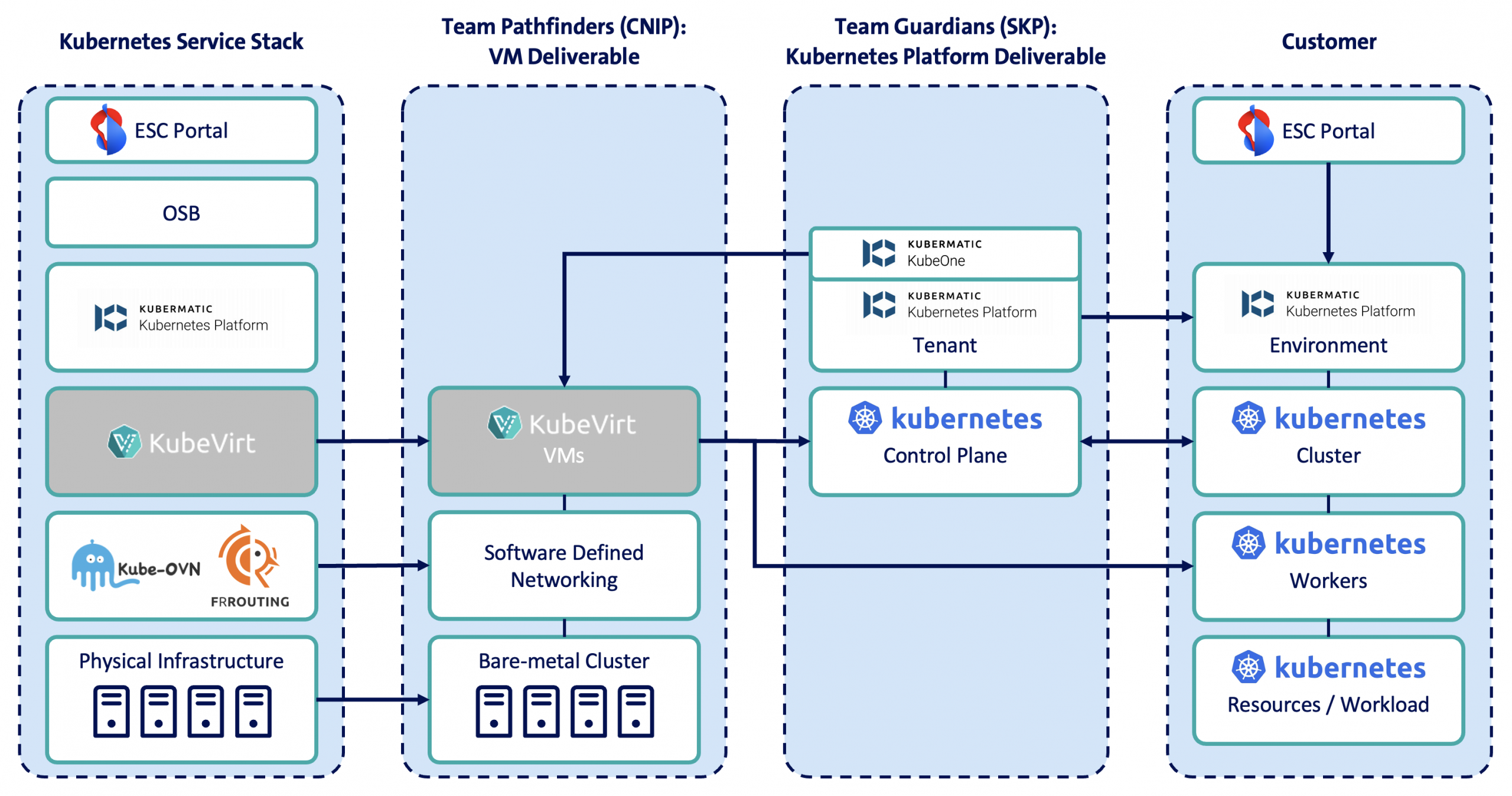
Key elements of the blueprint include:
- Full ownership of the stack using upstream open-source cloud-native technologies to avoid vendor lock-in.
- Strong data sovereignty guarantees (all data stays in Switzerland under Swiss law, with no exposure to foreign regulations like the US Cloud Act).
- A multi-tenant design with separate management and workload zones per customer environment, built on a consolidated infrastructure layer.
- Integration of KubeVirt (for VM abstraction on bare-metal with KVM), flexible CNIs (e.g., Cilium, Kube-OVN), native Kubernetes LoadBalancer, autoscaling, backups, and a self-service portal.
- Emphasis on upstream Kubernetes with faster update cycles and an application catalog for add-ons.
|
 Download the
 This model enables enterprises and service providers to deliver public-cloud-like capabilities while maintaining full control, competitive pricing, and regulatory compliance—making it highly relevant for regulated industries or countries prioritizing digital sovereignty.
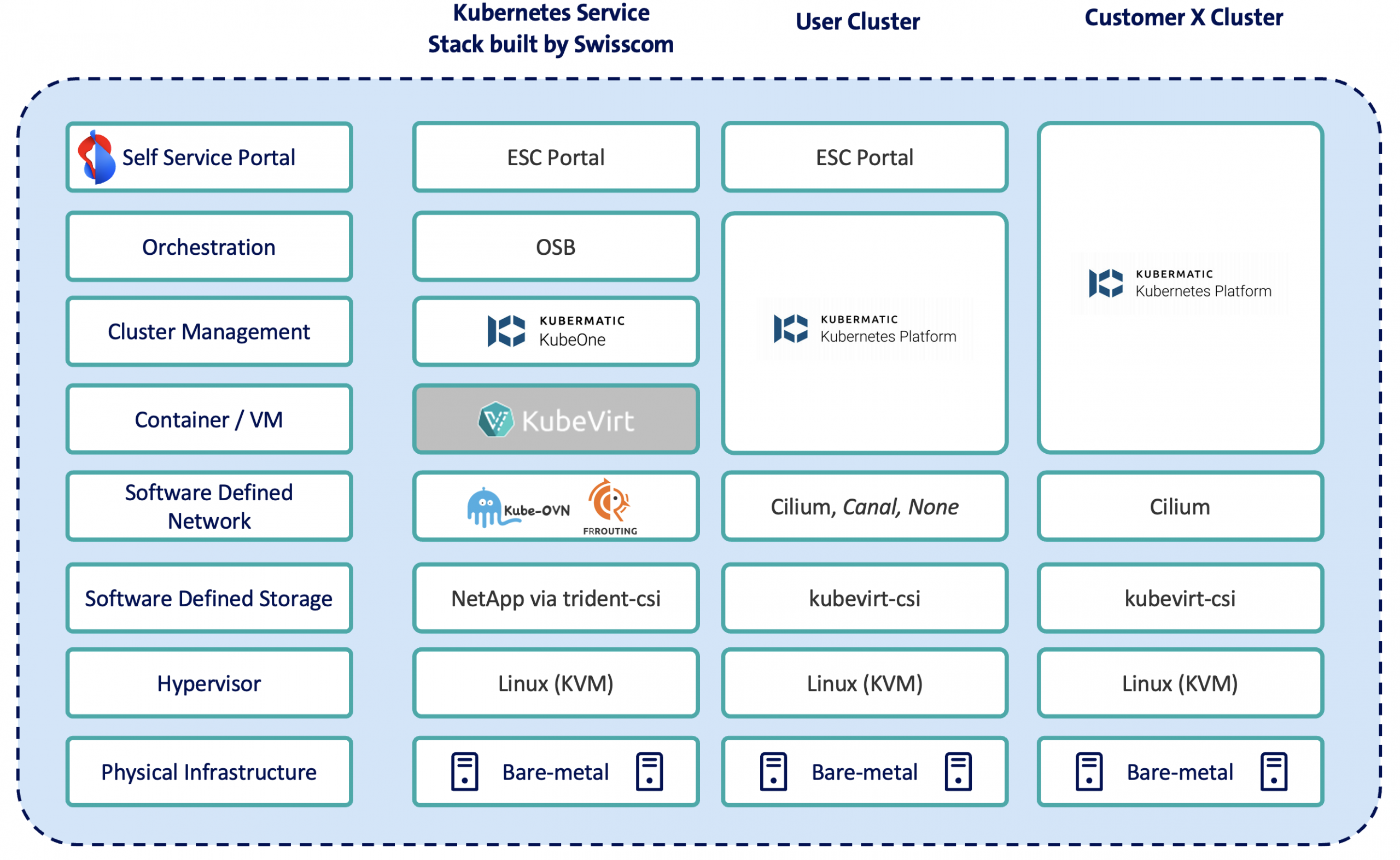
What Has Not Worked Well
Despite delivering major improvements over the previous vendor-specific container platform, Swisscom encountered several practical challenges during implementation and rollout:
- Enterprise-readiness of cloud-native technologies: Many tools performed well in internal tests and smaller-scale environments but revealed gaps when scaled to real B2B enterprise customer deployments. For example, KubeVirt had limited production-grade reference architectures and best practices available for large-scale use. Adopting advanced networking solutions like Kube-OVN required significantly more effort and complexity compared to mature traditional alternatives.
- Limited support and professional services: Open-source cloud-native projects often lack the robust, 24/7 enterprise-grade support and SLAs that customers demand. Swisscom notes that more vendors should offer transparent professional services, and suggests the CNCF could establish a “Certified Supporter” program to help build confidence.
- Knowledge gaps and skills requirements: The shift demanded substantial upskilling for in-house engineering teams to handle ongoing maintenance, troubleshooting, and operations of the new stack.
- Customer acceptance and migration challenges: Educating customers and convincing them to move from established legacy platforms to a newer sovereign solution required heavy investment in change management, training, migration support, and clear communication of the benefits (especially data sovereignty and independence from hyperscalers).
Conclusion
Swisscom’s experience highlights the real-world gap between the innovation and promise of cloud-native technologies and the maturity, support, and adoption hurdles required for enterprise-grade, customer-facing sovereign cloud services.
The architecture remains a valuable blueprint, but organizations following it should plan proactively for extended skills development, custom integration work, customer education, and hybrid support models.