From Telecom to Techco: Analyzing Spark New Zealand’s 2026 Strategic Roadmap
The report details Spark New Zealand's strategic pivot toward core connectivity, highlighting asset monetization and targeted investments in 5G, artificial intelligence, and satellite network innovation.

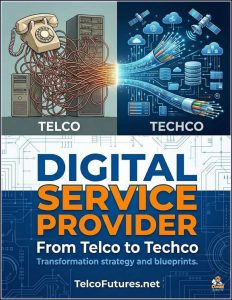 Spark New Zealand, formerly known as Telecom New Zealand, stands as a leading player in New Zealand’s advanced yet highly regulated telecommunications market.
As of early 2026, the company holds approximately 40.8% of the mobile market revenue share, serving consumers, small and medium enterprises (SMEs), and government clients across mobile, broadband, cloud, and emerging digital services.
The sector features a concentrated oligopoly dominated by three mobile network operators (MNOs)—Spark, One New Zealand (formerly Vodafone), and 2degrees—which together control about 97.5% of the mobile market. Fixed-line infrastructure remains a natural monopoly largely managed by Chorus, the infrastructure company separated from Spark in 2011.
Historical Evolution
New Zealand’s telecom history traces back to 1862 with the first telegraph line. For much of the 20th century, services operated as a state-owned monopoly under the New Zealand Post Office. The 1980s Rogernomics reforms introduced deregulation. The State-Owned Enterprises Act of 1987 created Telecom Corporation of New Zealand Limited, separating telecom from postal services. Privatization followed in 1990 for NZD 4.25 billion to a consortium led by Bell Atlantic and Ameritech.
Regulatory pressures persisted due to lingering monopoly power over fixed-line infrastructure. In 2008, operational separation divided the business into retail, wholesale, and Chorus (the network arm).
The 2011 structural demerger spun off Chorus as an independent listed company responsible for wholesale fixed-line networks, ending Spark’s direct control over much of the copper infrastructure and prohibiting Chorus from retail sales. In 2014, the company rebranded to Spark New Zealand, signaling a strategic shift from traditional telephony to broadband, entertainment, cloud computing, and digital services.
Key subsequent milestones include the 2016 launch of the Lightbox streaming service (later integrated with Sky), the start of nationwide 5G deployment in 2019, the 2022 divestment of a 70% stake in passive mobile tower assets (TowerCo) for NZD 1.175 billion, and 2025 moves such as the SPK-30 strategy announcement, a major data centre transaction, and the launch of satellite-to-mobile services.
Market Dynamics and Competition
New Zealand’s telecom market exhibits slow but steady growth. Mordor Intelligence forecasts the MNO segment expanding from roughly USD 4.09 billion in 2020 toward USD 4.78 billion by 2031 at a 2.57% CAGR. Data and internet services account for the largest share (around 52.78%), with the consumer segment dominating at approximately 75.64%. Enterprise and IoT/M2M segments show modest CAGRs of 3.04% and 2.89%, respectively.
Spark maintains leadership with a 40.8% mobile revenue share (slightly down 0.5 points in H2 2025) and a strong position in MVNO connections. One New Zealand holds 35.9% and emphasizes comprehensive rural coverage, targeting 99.5% population reach with 4G/5G upgrades by end-2025. 2degrees, strengthened by its 2022 merger with Vocus, commands 21.1% mobile share and about 20% of broadband, reporting FY25 revenue growth of 3.2% to NZD 1.385 billion and Trading EBITDA up 11.5% to NZD 395.3 million.
On the fixed-line side, Chorus’s Ultra-Fast Broadband (UFB) network covers 87% of the population with 72.1% uptake as of mid-2025. Copper connections have declined sharply—52% in urban areas in 2024—with fibre plans shifting toward more affordable options. Fibre 300 plans still dominate but have lost share, while lower-tier Fibre 50 connections have surged.
Regulatory Landscape
The sector is overseen by the Commerce Commission for competition and consumer issues, and the Ministry of Business, Innovation and Employment (MBIE) for policy. The 2001 Telecommunications Act is considered outdated.
A March 2026 review by the Ministry for Regulation proposed 22 changes, including phasing out legacy Telecommunications Service Obligations (TSO) for rural copper services, transitioning support to modern technologies, simplifying the Telecommunications Development Levy (TDL) with projected savings of $5 million over a decade, and streamlining wholesale fibre regulation for greater flexibility while strengthening consumer protections through enforceable codes.
These reforms could deliver net economic benefits of $35–45 million over ten years, freeing capital for operators like Spark to invest in 5G, AI infrastructure, and network modernization.
SPK-30 Strategy and Strategic Pivot
Under Chair Justine Smyth and CEO Jolie Hodson, Spark unveiled the SPK-30 strategy in September 2025. The five-year plan centers on the brand promise “It’s better with Spark,” emphasizing network reliability and superior customer experience amid economic headwinds. It represents a deliberate pivot back to core connectivity businesses, which generate around 80% of gross margins, while simplifying or exiting non-core areas.
Core pillars include reinforcing mobile market leadership through targeted brand investment, expanding 5G Wireless Broadband (WBB) offerings that deliver average speeds of 336 Mbps while bypassing Chorus fibre fees, and spectrum re-farming by shutting down 3G networks to boost 4G/5G capacity. Non-core simplification involves migrating customers to standardized solutions and leveraging AI-driven automation to reduce complexity.
Spark has executed several capital-recycling moves. In 2022, it sold a 70% stake in TowerCo for NZD 1.175 billion. In 2024, it exited its remaining 17% Connexa stake for NZD 314 million and sold Hutchison shares, generating a combined $356 million for reinvestment into mobile networks and data centres.
Cost-reduction efforts reduced the workforce by 1,300 full-time equivalents (FTEs) and established partnerships with vendors such as Ericsson, Nokia, Microsoft, Infosys, and HPE. These initiatives yielded $85 million in OpEx savings in H2 FY25 and $51 million in H1 FY26. Sustainability commitments under “Sustainable Spark” include transitioning to electric vehicle fleets, recycling programs, and a target of carbon neutrality by 2030.
Data Centre Infrastructure and Monetization
Spark has positioned itself as a sovereign data centre hub with a portfolio of hyperscale and edge facilities emphasizing seismic resilience and sustainability.
Key sites include the Takanini (South Auckland) Tier 3+ campus with a completed 10MW expansion and further growth planned; the Aotea (central Auckland) facility expanding toward 15MW as a networking and edge hub; and a planned 40MW North Shore campus featuring solar integration and innovative heat exchange systems. Additional edge nodes serve Wellington, Christchurch, Hamilton, Tauranga, Dunedin, and a Waikato site developed with university partnership.
In August 2025, Spark agreed to sell a 75% interest in its data centre business to Pacific Equity Partners for up to $705 million (transaction closed January 2026, generating $453 million in proceeds). Spark retained a 25% stake in the rebranded TenPeaks Data Centres, allowing continued participation in growth while monetizing the asset.
Next-Generation Networks and Connectivity
Spark’s 5G network now covers 90% of the population, with median download speeds exceeding 154 Mbps and annual investment surpassing NZD 100 million.
The company is transitioning to a 5G Standalone (SA) architecture using virtualized, cloud-native cores in partnership with Mavenir and Ericsson. This enables advanced capabilities such as 5G+ Assured (network slicing for guaranteed bandwidth) and 5G+ Private networks (isolated on-premise solutions for industrial automation, robotics, and mission-critical applications).
In subsea infrastructure, Spark maintains an equity stake (diluted to 38.12% following a Telstra transaction) in the Southern Cross NEXT cable, which entered service in July 2022 with 18 Tbps capacity connecting Sydney, Auckland, and Los Angeles, with branches to Pacific islands.
Satellite-to-Mobile and Roaming Innovation
Spark has embraced satellite convergence through an agreement with SpaceX Starlink Direct-to-Cell. Launched in April 2025, the service provides full data and text connectivity at no extra cost on premium plans, supporting everyday apps such as mapping and weather services. This contrasts with competitors’ more limited or fee-based offerings. Spark also secured a reciprocal satellite roaming agreement with Japan’s KDDI, enabling seamless connectivity between New Zealand and Japan—one of the first such arrangements globally.
Artificial Intelligence and Cloud Capabilities
Artificial intelligence is viewed as a major economic driver, with potential to add $26 billion to New Zealand’s economy by 2033. Spark’s alliance with Microsoft includes deployment of Microsoft 365 Copilot across 2,500 seats and Azure migrations that prioritize data residency.
The company’s Qrious subsidiary (led by CEO Stephen Ponsford) has earned Microsoft partner designations and runs an AI Accelerator program.
It integrates platforms like Databricks and Microsoft Fabric to deliver enterprise AI solutions. Notable use cases include conservation (kiwi bird call detection for the Department of Conservation), marine monitoring (dolphin location tracking), agriculture (Zespri kiwifruit applications), and dramatic efficiency gains in tax reporting.
Financial Performance and Dual-Brand Approach
In H1 FY26, Spark reported total revenue of NZD 1.893 billion (down 1.2%), with Adjusted EBITDAI rising 5.1% to NZD 471 million and Adjusted NPAT up 30.4% to NZD 73 million. Mobile services remained the largest contributor at NZD 499 million (+1.6%), followed by broadband and core connectivity (NZD 303 million). Legacy voice and IT service management segments continued to decline, underscoring the importance of the pivot to higher-margin core areas.
Spark operates a dual-brand strategy: the premium Spark brand targets higher-value consumers, enterprises, and government with advanced 5G bundles and satellite features, while the Skinny brand serves price-sensitive segments with competitive prepaid offerings.
Strategic Outlook
Spark New Zealand is navigating a mature, competitive market by refocusing on core connectivity strengths, monetizing non-core assets, and investing selectively in 5G Standalone, private networks, data centres, satellite integration, and AI capabilities. Regulatory modernization offers opportunities to reduce legacy burdens and accelerate innovation.
Success will depend on execution of the SPK-30 plan, effective capital allocation, vendor partnerships, and delivering differentiated customer experiences in a landscape shaped by technological convergence and economic pressures. The company’s evolution from a state-owned utility to a modern digital connectivity leader positions it to capitalize on New Zealand’s digital future while managing the challenges of a concentrated oligopoly and ongoing fixed-to-mobile transitions.