Empowering the Techco Transition: How SUSE is Driving AI-Native, Cloud-Native Telco Networks
SUSE Telco Cloud provides an open-source foundation helping telecom operators transition into agile techcos by enabling efficient, disaggregated, and automated AI-native and cloud-native network architectures.

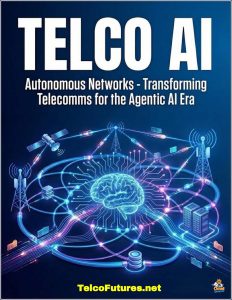 The telecommunications landscape is undergoing a seismic shift.
Faced with the soaring operational costs of 5G densification, stagnant revenue from basic connectivity, and the looming demands of 6G, Communications Service Providers (CSPs) are under immense pressure to evolve.
The mandate is clear: transition from traditional “Telcos” to agile “Techcos.” To achieve this, operators must embrace networks that are fundamentally disaggregated, cloud-native, and AI-native.
The Foundation: SUSE Telco Cloud
SUSE is at the forefront of this transformation. Through its recently rebranded and expanded SUSE Telco Cloud platform, the open-source pioneer is providing the essential, carrier-grade software foundation necessary to modernize telecom infrastructure, from the 5G Core to the farthest Radio Access Network (RAN) edge.
At the heart of SUSE’s telecom strategy is SUSE Telco Cloud, currently in its 3.4 iteration. This hardened, modular, and container-native software stack is specifically engineered to meet the stringent, low-latency demands of the telecom industry.
Built entirely on open-source technologies—including SUSE Linux Micro (an immutable, security-hardened OS), RKE2 (a CNCF-certified Kubernetes distribution), and SUSE Rancher Prime—the platform allows operators to host both legacy Virtual Network Functions (VNFs) and modern Cloud-Native Network Functions (CNFs) on the same unified infrastructure.
By providing a single pane of glass for multi-cluster management via Rancher, SUSE allows CSPs to orchestrate and scale downstream RAN sites efficiently. Furthermore, SUSE Telco Cloud now includes an extended lifecycle strategy, guaranteeing full-stack support for 24 months to give operators greater stability and long-term planning capabilities.
Accelerating the AI-Native Network
A major step to advance their Telco AI offering is the news SUSE has introduced SUSE AI Factory in collaboration with NVIDIA, a unified, full-stack platform designed to help enterprises rapidly build, deploy, and scale AI applications across data centers, edge environments, and cloud infrastructures.
True operational efficiency in modern telecom requires moving beyond siloed infrastructure to autonomous, AI-driven networks. SUSE facilitates this by providing the flexible architecture required to train and run localized AI inference models directly at the edge.
- Intelligent Power Optimization: Through a strategic partnership with Infosys, SUSE has demonstrated AI-native telco use cases that dynamically optimize RAN power consumption. By utilizing real-time operational data, energy forecasting models can intelligently toggle cell units and RF channels on or off during off-peak hours without degrading the user’s Quality of Experience (QoE). SUSE Telco Cloud acts as the low-footprint edge computing stack that executes these closed-loop automation processes.
- Next-Gen Hardware Integration: SUSE is collaborating with Intel and Supermicro to deliver a true single-box, CPU-only telco cloud node. Leveraging Intel Xeon 6 SoCs with built-in AI acceleration, this solution supports intense AI RAN inference workloads at the edge, paving the way for future AI-native 6G networks while dramatically reducing power consumption per site.
- Breaking Hyperscaler Lock-in: As enterprises and CSPs look to run heavy AI-inference workloads on Kubernetes, cloud costs have skyrocketed. SUSE’s partnership with providers like Vultr offers an open-source alternative to hyperscalers, granting organizations flexible access to GPU-enabled edge cloud infrastructure for AI workloads without restrictive vendor lock-in.
Driving Cloud-Native Disaggregation and Open Standards
A major hurdle for telco modernization has been navigating ecosystem fragmentation and the complexity of vertically integrated, proprietary stacks. SUSE addresses this by championing an open, disaggregated architecture.
- Alignment with Project Sylva: SUSE is deeply aligned with the Linux Foundation Networking’s Project Sylva. This initiative aims to reduce fragmentation by creating a common, open-source cloud software framework for telco and edge computing. By adhering to these standards, SUSE ensures that CSPs can adopt best-of-breed software and hardware components without integration friction.
- Zero-Touch Provisioning and GitOps: Scaling from a few core datacenters to tens of thousands of distributed remote edge sites is a monumental logistical challenge. SUSE utilizes a GitOps approach to enable fully automated, zero-touch lifecycle management of infrastructure components. This means operators can deploy the OS, Kubernetes, and network functions to a new site entirely remotely, minimizing the need for specialized technicians in the field.
Key Benefits for Operators
By adopting SUSE’s telco-optimized solutions, operators realize several transformative benefits:
- Carrier-Grade Performance: SUSE Telco Cloud guarantees the high forwarding performance, precision timing (PTP and SyncE for 4G/5G time sync), IPv4/IPv6 dual-stack support, and ultra-low latency necessary for mission-critical applications and Open RAN cell sites.
- Radical Energy Efficiency: The platform is designed for resource-constrained environments and natively supports ARM-based architectures alongside traditional x86-64 systems. Combined with AI-driven workload scaling, operators can significantly curb the escalating energy costs associated with 5G densification.
- Uncompromised Security: Distributed edge networks vastly expand the attack surface. SUSE secures the perimeter with an immutable OS, TPM 2.0-based disk encryption, continuous live patching, and integrated container security tools that detect and prevent runtime threats automatically.
Conclusion
The transition to an AI-native, cloud-native telecom network is no longer a futuristic concept—it is an immediate competitive necessity. SUSE provides a proven, open-source pathway out of legacy monolithic systems. By delivering uncompromised performance, zero-touch automation, and genuine architectural freedom, SUSE Telco Cloud empowers CSPs to monetize the edge, launch predictive AI services, and achieve the operational agility of a modern Techco.