GSMA Standards: The Foundation of SIM/eSIM as Telcos’ Secure Root of Trust for Digital Identity
GSMA standards establish SIM and eSIM as secure, tamper-resistant hardware roots of trust for digital identity, enabling telcos to unlock new revenues in the growing digital identity economy.

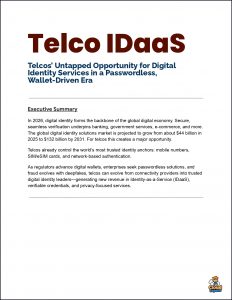 In an era of passwordless authentication, verifiable credentials, and EU Digital Identity Wallets (EUDI), telecommunications operators hold a decisive edge: they operate the planet’s most widely deployed, tamper-resistant secure elements—the SIM and eSIM.
These tiny chips, certified to the highest hardware security standards, already serve as the cryptographic foundation for authenticating billions of mobile connections daily.
As digital identity shifts toward self-sovereign models under eIDAS 2.0 and similar global frameworks, SIM/eSIM technology positions telcos to become primary issuers of high-assurance credentials, authentication services, and fraud-resistant identity layers—unlocking recurring revenue in a market projected to reach $15.32 billion by 2031 at a 13.4% CAGR.
The Technical Superiority of SIM/eSIM as Identity Anchors
Unlike software-based or device-bound authenticators, SIM and eSIM (embedded Universal Integrated Circuit Card, or eUICC) are purpose-built secure elements (SEs).
They store cryptographic keys and perform operations in isolated, tamper-resistant hardware—often certified to Common Criteria EAL4+ or equivalent. Network authentication relies on 3GPP standards (AKA protocol in 5G/6G), delivering out-of-band verification that is exceptionally difficult to spoof.
eSIM’s remote provisioning (GSMA SGP.22/SGP.32) adds flexibility: profiles can be downloaded, updated, or revoked over-the-air without physical access, enabling seamless lifecycle management. This makes the SIM not just a connectivity token but a programmable root of trust (RoT) for digital signatures, key management, and attribute attestation. GSMA frameworks like Mobile Connect and Number Verify already leverage the SIM for seamless, SIM-bound authentication—turning the mobile number into a trusted “something you have” factor that enterprises can consume via APIs.
Pre-existing KYC during SIM onboarding provides a “golden source” of verified identity data, which telcos can reuse (with explicit consent) to issue attested credentials far more efficiently than pure-play identity providers.
Core Identity Services Powered by SIM/eSIM
Telcos can directly monetize this infrastructure across three high-value layers:
- Strong, Passwordless Authentication (IDaaS): SIM-based methods deliver superior security and UX. Mobile Connect enables federated login without passwords; Number Verify confirms SIM possession in real time. Operators can offer these as Identity-as-a-Service to banks, retailers, and platforms—charging per-transaction or subscription fees. Network signals add continuous risk scoring (e.g., recent SIM swaps or location anomalies), reducing account takeover fraud.
- Issuance of Verifiable Credentials and Attestations: Using the SIM as the secure root, telcos can issue W3C-compliant verifiable credentials—such as mobile number attestations, age verification, or device-binding proofs—directly into digital wallets. In EUDI pilots (e.g., POTENTIAL consortium), SIM registration itself was a tested use case: citizens prove identity via EUDI to activate a SIM, while telcos issue reciprocal attestations back into the wallet. This creates a virtuous loop of reusable, selective-disclosure credentials.
- Wallet Secure Cryptographic Device (WSCD) Integration: Under eIDAS 2.0, EUDI wallets require high-assurance storage. The SIM/eSIM can serve as (or host) the Wallet Secure Cryptographic Device, anchoring keys for offline use and qualified electronic signatures. Emerging standards like Secured Applications for Mobile (SAM) and Cryptographic Service Provider (CSP) will let member states and telcos independently manage EUDI applets on eSIMs—bypassing device manufacturer silos while maintaining telco control over the root of trust.
Immediate Revenue Opportunities and Ecosystem Momentum
- eKYC Acceleration and Onboarding: Telcos reduce their own SIM fraud costs while offering instant verification services to fintechs and governments—cutting drop-off rates dramatically.
- Fraud Prevention as a Service: Real-time SIM-swap detection and behavioral signals become premium offerings.
- IoT and Enterprise Extension: eSIM profiles secure non-human identities (devices, even AI agents) with the same telecom-grade assurance, opening B2B2X models.
- Privacy-Enhancing Data Services: Consent-based, anonymized attestations compete with Big Tech while complying with GDPR.
European operators (Deutsche Telekom, Orange, Telefónica, Vodafone) already participate in EUDI large-scale pilots, testing SIM-credential flows. In Asia and beyond, unified platforms demonstrate retention and cross-service gains. GSMA Open Gateway further exposes these capabilities via standardized APIs, lowering integration barriers for relying parties.
Challenges and the Path to Leadership
Key hurdles remain: competition from device secure enclaves (Apple/Google), the need for independent eSIM applet management via SAM/CSP, and certification timelines. Yet telcos’ advantages—scale, regulatory alignment, and existing infrastructure—outweigh these. Forward-looking operators are investing in zero-trust architectures, API monetization, and partnerships with wallet providers.
By 2030, as EUDI wallets launch at scale and global digital ID programs accelerate, SIM/eSIM-based services could evolve from connectivity enablers into a high-margin identity pillar.
Telcos already authenticate the world’s mobile users every day; the infrastructure to become their trusted digital identity providers is literally in their hands. Those who expose these capabilities now—via secure APIs, credential issuance, and wallet integration—will capture the largest share of the emerging identity economy. The hardware root of trust is ready. The market window is open.
GSMA Standards
The GSMA has long positioned the SIM and eSIM not merely as connectivity tokens but as tamper-resistant hardware roots of trust for identity.
Through a portfolio of specifications, APIs, and certification schemes, GSMA standards enable telcos to deliver high-assurance authentication, verifiable credentials, and fraud-resistant services—directly supporting passwordless logins, EU Digital Identity Wallets (EUDI), and self-sovereign identity (SSI) ecosystems.
Mobile Connect: SIM-Centric Authentication Framework
Mobile Connect is GSMA’s flagship identity service, built on OpenID Connect and OAuth 2.0. It leverages the SIM as a “something you have” factor for seamless, out-of-band authentication without passwords.
Key specifications include:
- IDY.10 Mobile Connect SIM Applet Authentication Specification (v2.2.1): Defines SIM applet-based authentication, enabling strong, hardware-secured challenges.
- IDY.11 Mobile Connect SIM Applet – LoA 4 Extensions: Extends to the highest Level of Assurance (LoA 4), supporting digital signatures and qualified trust services.
- Supporting docs like IDY.54 (Verified MSISDN), IDY.24 (Account Takeover Protection / SIM Swap), and IDY.21 (Number Verification).
These map closely to CAMARA Project APIs under the GSMA Open Gateway initiative, allowing enterprises to consume services like Number Verify and SIM Swap detection via standardized northbound APIs. As of 2026, legacy Mobile Connect specs are being withdrawn in favor of full Open Gateway/CAMARA integration for broader interoperability.
Mobile Connect delivers LoA 2–4 authentication (SMS OTP, click-to-confirm, SIM PIN, applet-based) and has been piloted extensively for KYC, banking, and government services.
eSIM Standards: Programmable, Remote-Managed Secure Elements
GSMA’s eSIM specifications transform the SIM into a remotely updatable, cryptographic anchor:
- SGP.22 (Consumer eSIM): Defines remote SIM provisioning (RSP) for consumer devices via SM-DP+ (Subscription Manager – Data Preparation Plus). The eUICC (embedded UICC) acts as a certified secure element (Common Criteria EAL4+ or higher).
- SGP.32 (IoT eSIM): The 2024–2025 standard optimized for massive IoT deployments. It introduces the eSIM IoT Manager (eIM) and IoT Profile Assistant (IPA/IPAd/IPAe), enabling zero-touch, IP-based provisioning without SMS. Cryptographic authentication of Profile State Management Operations (PSMOs) ensures tamper-proof profile downloads, updates, and resets.
- SGP.02 (legacy M2M) and SGP.29 (GSMA EID Definition and Assignment): Support eUICC identity schemes and certificates.
All are backed by GSMA’s Security Accreditation Scheme (SAS) for production sites, subscription managers, and eUICC hardware—ensuring encryption, profile management, and privacy by design. GSMA issues root certificates for ecosystem trust.
This hardware root enables telcos to issue mobile number attestations, device-binding proofs, and selective-disclosure credentials directly into digital wallets.
Open Gateway & Network APIs: Exposing SIM Intelligence
GSMA Open Gateway (via CAMARA) standardizes exposure of operator network capabilities, turning SIM/network signals into monetizable identity services:
- Number Verification (Verified MSISDN)
- SIM Swap / Account Takeover Protection
- Device Status / Device Check (integration with global blocklists for lost/stolen devices)
- KYC Match and location/risk signals
These APIs support consent-driven, real-time identity assurance for banks, fintechs, and governments—reducing fraud while complying with GDPR and eIDAS. Over 70 operator groups have joined, accelerating global reach.
Certification, Security, and Ecosystem Alignment
GSMA’s SAS, eSIM Compliance Process (SGP.24), and protection profiles (e.g., SGP.25) guarantee that SIM/eSIM solutions meet the highest security standards. In EUDI pilots (POTENTIAL consortium), operators like Deutsche Telekom, Orange, Telefónica, and Vodafone tested SIM-based credential issuance and wallet integration—leveraging the SIM as a Wallet Secure Cryptographic Device.
GSMA also promotes “SIM as Root of Trust” concepts (e.g., IoT SAFE / IoT.04 guidelines) for IoT device authentication, extending identity services beyond consumers.
Strategic Implications for Telcos
These standards collectively give telcos:
- Hardware-rooted LoA 3–4 assurance unattainable by pure software solutions.
- Reusable KYC from SIM onboarding.
- API-monetizable services (IDaaS, verifiable credentials, fraud prevention).
- Interoperability across consumer, IoT, and enterprise use cases via SGP.32 and Open Gateway.
With eIDAS 2.0 wallets launching at scale in 2026 and global digital ID programs accelerating, GSMA standards provide the blueprint for telcos to evolve from connectivity providers to trusted identity platforms. The infrastructure—SIM applets, eUICC certificates, and network APIs—is already deployed at billions of scale. Execution through Open Gateway exposure and ecosystem partnerships will determine market leadership in the identity economy.