Unlocking the Streaming Goldmine: Telcos’ Strategic Play in the OTT Era
Far from being sidelined by Netflix, Disney+, or Amazon Prime Video, forward-thinking telcos are turning connectivity into a competitive moat.

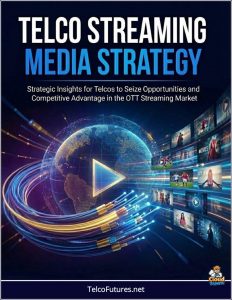 The global video streaming market is exploding.
Projections show OTT video revenues reaching approximately $353 billion in 2026, with the broader video streaming sector valued at $277 billion that year and on track to hit nearly $886 billion by 2036 at a 12.3% CAGR.
Traditional pay-TV continues its decline as cord-cutting accelerates, yet telcos—armed with last-mile networks, millions of broadband and mobile subscribers, and deep customer relationships—stand uniquely positioned to capture a outsized share of this growth rather than merely transporting it.
Far from being sidelined by Netflix, Disney+, or Amazon Prime Video, forward-thinking telcos are turning connectivity into a competitive moat.
By bundling, aggregating, and even owning streaming experiences, they combat churn, lift ARPU, and differentiate in an increasingly commoditized broadband world. The opportunity is not theoretical: in 2025–2026, telco-driven bundles already account for 77% of all streaming partnership agreements worldwide, and operators such as Comcast, Verizon, Orange, and Claro are proving the model works at scale.
Why the Opportunity Exists Now
Three structural tailwinds favor telcos:
- Bundle fatigue and consolidation among consumers. Households juggling 3+ standalone SVODs are down year-over-year; bundles reduce churn and deliver perceived value that pure streamers cannot match.
- Network control in a latency-sensitive world. Sub-3-second latency for live sports, interactive betting, and multi-view experiences is becoming table stakes in 2026. Only telcos own the access network and can guarantee QoS at scale.
- Data and billing superpowers. Telcos already handle payments, know household usage patterns, and can personalize offers in real time—advantages global OTT players can only approximate through partnerships.
The result: TV (linear + OTT) remains a powerful retention engine. Households with telco video services upgrade broadband tiers more often, churn less, and serve as gateways to smart-home and cloud services.
Telcos’ Unique Advantages
Global streamers excel at content and algorithms; telcos excel at delivery, trust, and integration. Key edges include:
- Ownership of the access network for superior QoE, zero-rating, and edge caching.
- Established billing relationships and carrier billing for frictionless subscriptions.
- Local regulatory relationships and rights to regional sports, news, and language content.
- Physical support infrastructure and brand trust that make “the TV just works” a reality.
These advantages cannot be easily replicated by Silicon Valley players.
Proven Success Stories (2025–2026)
- Comcast (Xfinity) — Launched native Peacock and now offers the StreamSaver bundle (Netflix with ads + Peacock Premium + Apple TV+) for $15/month to broadband subscribers. The operator also bundles Peacock, Apple TV+, and Netflix in custom tiers, proving cable operators can evolve into super-aggregators without linear TV dependency.
- Verizon — Mobile bundles with Netflix + Max or the full Disney bundle drive subscriber stickiness; wireless plans increasingly include streaming as a core perk.
- Orange (Europe) — Completed MasOrange consolidation in early 2026, creating an integrated connectivity + media powerhouse that accelerates direct-to-consumer OTT strategies across France and Spain.
- APAC operators (Claro, Verizon equivalents, SKY) — Logged 504 OTT-operator partnerships in 2025 alone (up 12.2% YoY), using carrier billing and data plans to penetrate emerging markets.
These operators are not defending legacy pay-TV; they are pivoting it into profitable, cloud-native OTT experiences.
The Six Best Strategies for Telcos to Win
1. Become the Ultimate Bundle Super-Aggregator
Offer a single bill that combines broadband/mobile + 3–5 premium streamers (Netflix, Disney+, Max, Peacock, local content). Use zero-rating on mobile and prioritized bandwidth on fixed networks. Early movers like Comcast’s StreamSaver and Verizon’s mobile perks show 30–40% savings for consumers translate into higher retention and ARPU lift.
2. Launch or Evolve a Native OTT Platform (or Both)
Comcast’s Peacock model is replicable at smaller scale: start with sports/live rights you already control, add cloud DVR, catch-up, and FAST channels. Migrate legacy IPTV to cloud-native architectures (microservices, open APIs, app-based delivery across smart TVs, mobiles, and streaming sticks). Operators replacing monolithic systems report faster feature velocity and lower OpEx.
3. Leverage 5G, Edge Computing, and Network Slicing for Differentiated QoE
Guarantee sub-3-second latency for live sports and interactive features (multi-view, real-time betting). Use Multi-access Edge Computing (MEC) to cache content closer to users and network slicing to prioritize video traffic. This creates premium “VIP streaming” tiers that pure OTT players cannot match.
4. Monetize Data and Personalization Ethically
Analyze household viewing + usage patterns to surface proactive offers (“Upgrade for 4K sports + Peacock at no extra cost”). Carrier billing and single sign-on reduce churn from forgotten subscriptions. Combine with AI-driven recommendations that blend live, on-demand, and third-party catalogs.
5. Double Down on Local and Live Content
Secure regional sports, news, and cultural programming that global streamers under-serve. Add micro-drama series (APAC success) or national events. Layer FAST channels for ad revenue without cannibalizing SVOD.
6. Embrace Flexible Monetization and Open Ecosystems
Offer SVOD, AVOD, FAST, PPV, and transactional tiers. Explore API monetization via Open Gateway for third-party developers. Build (or partner into) super-apps that aggregate content, payments, and even IoT/smart-home controls.
Execution Roadmap
- Short term (0–12 months): Audit current video assets, launch or refresh bundling deals, pilot edge-cached 5G streaming.
- Medium term (12–24 months): Migrate legacy IPTV to cloud-native platforms; integrate analytics and personalization engines.
- Long term: Position as the household entertainment OS—connectivity + content + smart-home control.
Risks and Mitigation
Content acquisition costs remain high; mitigate via partnerships rather than all-in original production. Regulatory scrutiny on data use and net neutrality requires transparent opt-ins. Capex discipline is essential—cloud migration and edge deployments must show clear ROI through churn reduction and ARPU uplift.
The Bottom Line
In 2026, streaming is no longer a threat to telcos—it is their greatest growth engine. Operators that treat video as a core differentiator rather than a legacy add-on will capture disproportionate share of a $350+ billion OTT market while fortifying their broadband and mobile bases. Those that hesitate risk becoming dumb pipes.
The playbook is proven: bundle aggressively, control the network experience, personalize ruthlessly, and own the customer relationship. Telcos that execute these strategies will not just survive the streaming revolution—they will lead it.