Tesla Self-Driving Cars Explained: Autopilot, Self-Driving, and the Path to Robotaxis
Tesla's self-driving journey decoded: from standard Autopilot to advanced self-driving, powered by pure vision AI and billions of real-world miles.

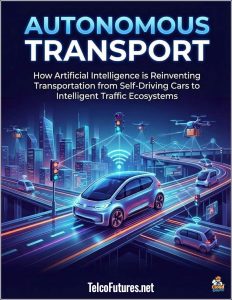 Tesla has pioneered one of the most ambitious and controversial autonomous driving systems in the world.
Unlike traditional automakers or competitors like Waymo (which rely on lidar, radar, and high-definition maps), Tesla’s approach is vision-only: it uses cameras and artificial intelligence trained on billions of real-world miles.
The technology is officially called Full Self-Driving (Supervised) — a Level 2 advanced driver-assistance system (per SAE standards) that still requires a human driver to stay attentive and ready to intervene at all times.
Basic Autopilot: Standard on Every Tesla
Every new Tesla comes with Autopilot as standard equipment. This includes core safety and convenience features powered by the vehicle’s cameras and AI computer:
- Traffic-Aware Cruise Control (TACC): Automatically maintains speed and distance from the car ahead.
- Autosteer: Keeps the car centered in its lane on highways and certain roads.
- Active safety tools like Automatic Emergency Braking, Forward Collision Warning, Blind Spot Monitoring, and Lane Departure Avoidance.
These features make highway driving easier but still demand full driver attention — you must keep your hands on the wheel and eyes on the road.
Full Self-Driving (Supervised): The Advanced Package
FSD (Supervised) builds on Autopilot with city-street intelligence. It is available as a $99/month subscription (Tesla stopped selling it as a one-time purchase in early 2026). Once subscribed and updated over-the-air, the car can:
- Navigate to your destination on almost any road (highways, city streets, residential areas).
- Automatically change lanes, select the correct fork at intersections, make left/right turns, navigate roundabouts, and stop at traffic lights/stop signs.
- Autopark: Parallel or perpendicular park itself.
- Actually Smart Summon: Call the car to you in parking lots (it maneuvers around obstacles).
To engage it, you tap “Start Self-Driving” on the touchscreen (at speeds under 85 mph). A blue steering path appears on the display, confirming it’s active.
Key requirement: You must supervise it. The system issues audio/visual warnings if you look away too long; repeated inattention leads to “strikeouts” and temporary suspension. Tesla explicitly states: “These features do not make the vehicle autonomous.”
How Tesla’s System Actually Works
Tesla’s “Tesla Vision” relies on eight external cameras providing 360-degree coverage. There is no lidar or radar in current models — the AI computer processes visual data in real time using neural networks trained on data from millions of Teslas (over 8.7 billion FSD miles driven fleet-wide as of early 2026).
The car builds an internal 3D model of the surroundings, predicts what other road users will do, and plans smooth maneuvers. Over-the-air software updates (often weekly or monthly) continuously improve behavior — recent versions (e.g., v14) have dramatically reduced interventions on highways and city streets.
This end-to-end neural-net approach lets the car handle complex scenarios like construction zones, narrow roads, or emergency vehicles better than older rule-based systems.
Tesla Vision AI: The Camera-Only Backbone of Tesla’s Autonomy
Tesla Vision is the company’s proprietary vision-based artificial intelligence system that powers Autopilot and Full Self-Driving (Supervised) features.
Unlike competitors such as Waymo, Cruise, or traditional automakers that combine cameras with radar, lidar, and ultrasonic sensors (a strategy called sensor fusion), Tesla relies exclusively on cameras and neural networks to “see” and understand the world.
Tesla Vision is an end-to-end neural network approach, meaning the AI learns directly from raw camera pixels to driving decisions with minimal hand-coded rules. This approach, often called “pure vision” or “Tesla Vision,” has been the standard for all new Tesla vehicles since 2021.
Safety Record: Tesla’s Claims vs. Real-World Scrutiny
Tesla publishes quarterly safety data claiming FSD (Supervised) vehicles experience 7× fewer major and minor collisions than the U.S. average, and 5× fewer off-highway collisions. With over 8.7 billion FSD miles logged, the company says it could prevent tens of thousands of crashes annually if widely adopted.
However, regulators and independent reports highlight challenges. The National Highway Traffic Safety Administration (NHTSA) continues investigations into FSD-related incidents, including red-light violations and wrong-way driving. Early unsupervised Robotaxi operations in Austin (launched January 2026) recorded higher incident rates in some analyses than human drivers, though Tesla disputes the methodology and redacts many details.
The bottom line: FSD is among the most advanced Level 2 systems available today (MotorTrend called it the best driver-assistance tech of 2026), but it is not yet flawless or driverless.
The Future: Unsupervised Robotaxis and Cybercab
Tesla’s ultimate goal is Full Self-Driving (Unsupervised) — true robotaxis where no human supervision is needed. In January 2026, Tesla began offering unsupervised Robotaxi rides in Austin using standard Model Y vehicles (no safety driver onboard). Expansion to more cities and nationwide unsupervised FSD is targeted for later in 2026.
The dedicated Cybercab (a two-seat, steer-less robotaxi unveiled in 2024) is slated for volume production starting in 2026–2027, initially using the current AI computer hardware before upgrading to the more powerful AI5 chip. This vehicle, combined with unsupervised software, is central to Tesla’s vision of a high-utilization, low-cost autonomous ride-hailing network.
Should You Subscribe?
FSD (Supervised) shines on long highway trips and familiar city routes, dramatically reducing driver fatigue for many owners. If you drive a lot in supported regions (U.S., Canada, China, Mexico, Australia, etc.), the monthly subscription lets you test it risk-free. However, it is not a set-it-and-forget-it autopilot — complacency can be dangerous.
Tesla’s self-driving technology has evolved faster than almost any other in the industry, moving from basic lane-keeping in 2014 to near-autonomous city driving today. While true unsupervised robotaxis remain a work in progress, the foundation — massive real-world data, vision-only AI, and rapid OTA updates — positions Tesla at the forefront of the autonomous revolution. The cars aren’t fully self-driving yet, but they’re getting remarkably close.