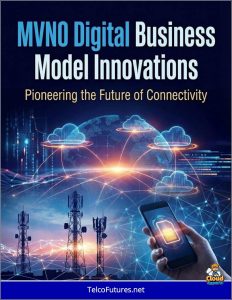
MVNO Digital Business Model Innovations: Pioneering the Future of Connectivity
This guide explores the cutting-edge innovations in MVNO business models, highlighting how they are redefining connectivity and creating value in a hyper-competitive market.

 In June 2025, Swedish fintech giant Klarna announced its entry into the U.S. mobile market with an unlimited 5G mobile plan priced at $40 per month, marking a significant pivot into the telecommunications sector through an MVNO partnership.
This strategic move, leveraging the platform of U.S. mobile services startup Gigs and AT&T’s network infrastructure, exemplifies how telcos can collaborate with innovative non-traditional partners to capture new market opportunities and diversify revenue streams.
Klarna’s initiative aligns with a broader trend of fintechs, such as Revolut and N26, entering the MVNO space to enhance their neobank offerings, reflecting the growing convergence of financial services and telecommunications.
Klarna’s partnership strategy showcases several key lessons for telcos. By collaborating with Gigs, a Google-backed platform that simplifies MVNO operations, and AT&T, a leading Mobile Network Operator (MNO), Klarna can offer seamless, no-hassle mobile plans integrated directly into its app, appealing to its 25 million U.S. users.
This approach highlights the value of selecting partners with complementary strengths—Gigs provides technological agility, while AT&T ensures robust network coverage. The partnership enables Klarna to focus on branding and customer experience, offering a simple plan with unlimited 5G data, calls, and texts, addressing consumer pain points like complex switching processes and hidden fees.
Revolut
Revolut, a UK-based fintech giant with over 60 million global users, announced in April 2025 its entry into the telecommunications sector as a Mobile Virtual Network Operator (MVNO), launching mobile plans in the UK and Germany with plans for further expansion, including Poland.
This strategic move, building on the success of its eSIM product launched in 2024, exemplifies how non-traditional players can disrupt the telecom industry by leveraging existing customer bases, digital platforms, and innovative business models. For telcos, Revolut’s MVNO strategy offers valuable insights into forging successful partnerships, targeting niche markets, and embracing digital-first approaches.
Revolut’s MVNO model relies on leasing network capacity from established Mobile Network Operators (MNOs), allowing rapid market entry without the high costs of building infrastructure.
While its operating partners remain undisclosed, Revolut has indicated collaborations with MNOs spanning multiple markets, ensuring robust 5G connectivity. Its mobile plans, priced at £12.50 per month in the UK and €12.50 in Germany, offer unlimited domestic calls, texts, and data, with 20GB (UK) or 40GB (Germany) of EU and US roaming data, all without fixed contracts.
This aligns with Revolut’s customer-centric ethos, addressing pain points like hidden fees, rigid contracts, and poor user experiences. The integration of mobile services into its app, alongside banking and lifestyle features, positions Revolut as a “super-app,” mirroring platforms like WeChat, and enhances customer retention through seamless cross-selling opportunities.
Mobile Virtual Network Operators (MVNOs) have long been disruptors in the telecommunications industry, offering innovative services by leveraging the infrastructure of Mobile Network Operators (MNOs). As digital transformation reshapes industries, MVNOs are at the forefront of pioneering new business models that prioritize agility, customer-centricity, and technological integration.
The MVNO Landscape: A Foundation for Innovation
MVNOs operate without owning physical network infrastructure, instead partnering with MNOs to deliver mobile services under their own brand. This lean structure allows MVNOs to focus on niche markets, tailored offerings, and operational efficiency.
However, in today’s digital-first world, MVNOs are moving beyond traditional reseller models to embrace transformative business strategies. These innovations are driven by advancements in technology, shifting consumer expectations, and the need to differentiate in a crowded market.
Key Digital Business Model Innovations
- Data-Driven Personalization and Customer-Centric Services – Modern MVNOs are harnessing big data and artificial intelligence (AI) to deliver hyper-personalized services. By analyzing customer behavior, preferences, and usage patterns, MVNOs can offer tailored plans, dynamic pricing, and value-added services. For instance, some MVNOs use AI algorithms to recommend data bundles or roaming packages based on real-time user needs, enhancing customer satisfaction and loyalty. Example: An MVNO targeting digital nomads might offer flexible, pay-as-you-go plans with seamless global roaming, automatically adjusting data allowances based on travel patterns detected through geolocation data.
- Embedded eSIM and Digital Onboarding – The rise of embedded SIM (eSIM) technology has revolutionized MVNO operations. eSIMs enable fully digital onboarding, allowing customers to activate services instantly without physical SIM cards. This reduces operational costs and enhances user experience. MVNOs are leveraging eSIMs to offer subscription-based models, where users can switch plans or providers via a mobile app, fostering flexibility and convenience. Example: Companies like Truphone and GigSky have embraced eSIM to provide global connectivity solutions, enabling travelers to purchase and activate data plans in minutes through a digital interface.
- Niche Market Focus and Brand Differentiation – MVNOs are increasingly targeting underserved or niche demographics, such as Gen Z, small businesses, or specific cultural communities. By aligning their brand with these segments’ values and needs, MVNOs create strong emotional connections. Digital platforms enable targeted marketing, community engagement, and loyalty programs tailored to these groups. Example: An MVNO focused on sustainability might offer carbon-neutral plans, partnering with environmental initiatives and using digital campaigns to appeal to eco-conscious consumers.
- Subscription-Based and Bundled Services – Inspired by the success of subscription-based models in streaming and software industries, MVNOs are introducing all-inclusive plans that bundle connectivity with value-added services like cloud storage, cybersecurity, or streaming subscriptions. These bundles create sticky customer relationships and diversify revenue streams. Example: An MVNO might partner with a music streaming service to offer unlimited data for streaming alongside a premium subscription, appealing to younger audiences.
- IoT and M2M Connectivity Solutions – The Internet of Things (IoT) and Machine-to-Machine (M2M) communications present significant opportunities for MVNOs. By offering specialized connectivity solutions for IoT devices—such as smart home systems, wearables, or industrial sensors—MVNOs are tapping into B2B markets. These services often include scalable data plans, robust security, and centralized device management platforms. Example: An MVNO catering to smart cities might provide connectivity for traffic sensors, optimizing data usage and offering analytics dashboards to municipal clients.
- Blockchain and Decentralized Models – Some MVNOs are exploring blockchain to create decentralized, transparent billing systems or tokenized loyalty programs. Blockchain ensures secure transactions, reduces fraud, and enhances trust. Additionally, decentralized MVNOs are emerging, where users can share unused data or bandwidth within a community, creating a peer-to-peer connectivity ecosystem. Example: A blockchain-based MVNO could allow users to earn tokens by sharing their data allowance, which can be redeemed for additional services or traded in a marketplace.
- 5G and Edge Computing Integration – The rollout of 5G networks has opened new doors for MVNOs to offer high-speed, low-latency services. By integrating edge computing, MVNOs can support applications requiring real-time processing, such as augmented reality (AR) or autonomous vehicles. This positions MVNOs as enablers of next-generation technologies.Example: An MVNO targeting gamers might offer low-latency 5G plans optimized for cloud gaming, ensuring seamless performance for competitive players.
The Road Ahead: A Vision for MVNOs
While these innovations offer immense potential, MVNOs face challenges in implementation. Regulatory hurdles, dependency on MNO infrastructure, and intense competition require strategic partnerships and continuous investment in technology. However, the opportunities are vast—MVNOs that successfully adopt digital business models can capture market share by offering unparalleled flexibility, affordability, and customer experiences.
The future of MVNOs lies in their ability to blend technology with customer intimacy. By embracing AI, eSIM, IoT, and decentralized models, MVNOs can transcend traditional telecom boundaries, becoming digital lifestyle providers. Strategic partnerships with tech giants, content providers, and IoT innovators will further amplify their impact.
To thrive, MVNOs must:
- Invest in Digital Platforms: Build intuitive apps and websites for seamless customer interactions.
- Leverage Emerging Technologies: Adopt 5G, AI, and blockchain to stay ahead of the curve.
- Focus on Sustainability and Ethics: Align with consumer values like privacy and environmental responsibility.
- Collaborate Strategically: Partner with MNOs, tech firms, and niche brands to expand offerings.
Conclusion: Redefining Connectivity with Purpose
MVNOs are no longer just low-cost alternatives to traditional carriers—they are trailblazers in the digital economy. By embracing innovative business models, they are redefining how connectivity is delivered and experienced.
From personalized plans to IoT ecosystems, MVNOs are proving that agility and customer focus are the keys to success in a connected world. As they continue to push boundaries, MVNOs will not only shape the future of telecom but also inspire industries to rethink what’s possible in a digital-first era.